Enhance Your Space with Soft Ambient Corridor Lighting
Think your hallway is just a pass-through zone? It doesn’t have to be. Soft ambient corridor lighting can actually transform it from a forgotten space into a welcoming and functional part of your home. It’s about creating a gentle, understated glow that makes your corridors feel more inviting, safer, and even a little bit bigger.
Let’s break down why focusing on soft, ambient light Muzzhome for your corridors is a smart move. It’s not about blinding brightness; it’s about setting a mood and serving practical needs without being intrusive.
Creating a Welcoming Atmosphere
First impressions matter, and your hallway is often the first space guests experience.
Subtle Warmth, Big Impact
Instead of harsh overheads that can feel stark, soft lighting casts a warm, inviting glow. This makes people feel more at ease as they enter your home.
Setting the Tone
The type of light you choose can hint at the overall atmosphere of your home. A soft, diffused light suggests comfort and tranquility.
Enhancing Safety and Navigation
Beyond aesthetics, good lighting in corridors is crucial for preventing trips and falls.
Reducing Glare and Shadows
Harsh lights can create deep shadows where people might not see obstacles. Soft ambient light minimizes these harsh contrasts, making it easier to navigate.
Guiding the Way
Strategically placed soft lights can act as visual cues, guiding people through the space, especially in larger or more complex layouts.
Making Spaces Feel Larger
Believe it or not, light can play a trick on your eyes.
Visual Expansion
Well-lit areas tend to feel more open. By avoiding dark corners and creating a consistent, gentle illumination, you can make narrower or shorter corridors feel more expansive.
Encouraging Flow
Soft light can draw the eye through the space, making it feel less like a confined tunnel and more like a flowing path.
Understanding Ambient Lighting Principles
Ambient lighting is the foundational layer of light in any room. For corridors, it’s the dominant force, providing the overall illumination.
The Foundation of Illumination
Think of it as the general light that fills the space before you add any task or accent lighting.
Even Distribution is Key
The goal here is to spread light evenly. Avoid hot spots of intense brightness next to complete darkness.
Low Intensity, High Coverage
Ambient lighting is typically lower in intensity than task lighting, but it covers a broader area, ensuring no corner is left in shadow.
Color Temperature Matters
The “warmth” or “coolness” of your light has a significant impact on how a space feels.
Warm Whites (2700K – 3000K)
These are the cozier, yellowish tones. They are excellent for creating a warm and inviting atmosphere, perfect for residential hallways. Think of the glow from a traditional incandescent bulb.
Neutral Whites (3500K – 4000K)
These are closer to natural daylight. They offer good clarity without being too stark. They can be a good option if you want a more neutral feel.
Cool Whites (4500K and up)
These have a bluish tint and are generally too bright and clinical for a residential corridor’s ambient lighting. They are better suited for task lighting in workshops or garages.
Light Source Placement
Where you put your lights makes a big difference in how the light is distributed.
Wall-Mounted Fixtures
These can be sconces or discreet upward-facing lights that bounce light off the ceiling.
Recessed Downlights
When used thoughtfully, recessed lights can provide even coverage. Consider using them sparingly and at a lower intensity.
Integrated Lighting
Many modern solutions involve lighting built directly into architectural features like handrails or ceiling coves.
Types of Soft Ambient Corridor Lighting Fixtures
Choosing the right fixture is essential for achieving that soft, ambient effect. It’s not just about the bulb; it’s about how the fixture diffuses and directs the light.
Wall Sconces
These are a classic choice for a reason. They offer a good opportunity to direct light both upwards and downwards, or in a diffused pattern.
Upward-Facing Sconces
These bounce light off the ceiling, creating a very soft, indirect illumination. They can make a corridor feel taller.
Downward-Facing Sconces
These cast light towards the floor, which can be helpful for defining the path and providing subtle illumination without glare.
Diffused Sconces
Many sconces have frosted glass or fabric shades that spread the light evenly, eliminating harshness.
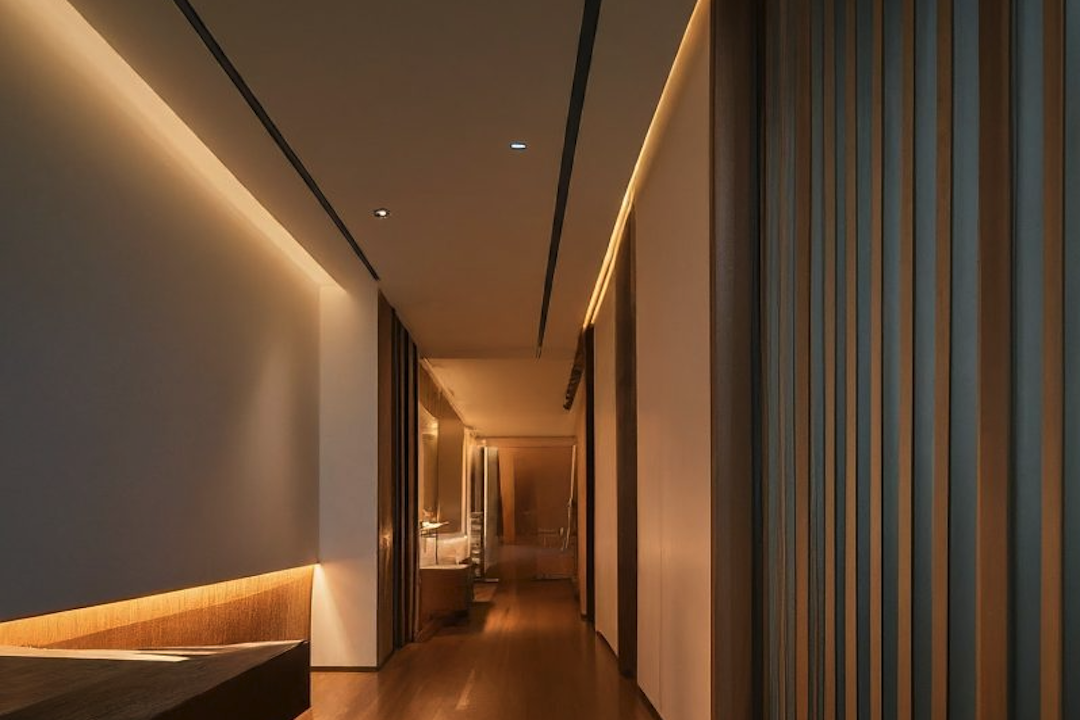
Cove Lighting
This is a technique where light sources are hidden within a ledge or “cove” in the wall or ceiling.
Indirect Illumination
The light is bounced off the ceiling and/or walls, creating a very soft, even glow that wraps around the corridor.
Seamless Integration
When done well, cove lighting can look almost invisible, adding a touch of modern elegance.
Recessed Lighting with Diffusers
While standard recessed downlights can be harsh, there are variations designed for softer illumination.
“Wall Washer” Style
These are angled to direct light down the wall, providing a more even wash of light rather than pools of brightness.
Frosted or Opal Lenses
Opt for recessed fixtures with frosted or opal lenses that scatter the light, reducing the perception of individual bulbs.
Low-Lumen Bulbs
Choosing bulbs with lower lumen output (brightness) is key, regardless of the fixture type.
Profile and Strip Lighting
LED strip lights can be incredibly versatile and discreet.
Integrated intoArchitectural Features
Think about placing them under a handrail, along the baseboard, or within trim.
Linear Illumination
This provides a continuous, gentle line of light that can guide the eye and define the corridor’s length.
Dimming Capability
Crucial for ambient lighting, LED strips almost always come with dimming capabilities, allowing you to fine-tune the brightness.
Pendant Lights (Used Sparingly)
While typically more of a decorative or task light, a very simple, diffused pendant can work.
Low-Hanging, Soft Shade
A small pendant with a fabric or frosted glass shade could provide a touch of ambient light.
Not for Narrow Corridors
These are generally better suited for wider hallways or if used as part of a layered lighting scheme.
Smart Control and Dimming for Ambient Corridors
The real magic of soft ambient lighting often comes down to control. Being able to adjust the light is just as important as the fixture itself.
The Power of Dimmer Switches
This is your most important tool for achieving the right ambiance.
Fine-Tuning Brightness
Even the softest fixtures might be too bright at full power. Dimmers allow you to dial it down to the perfect level.
Adapting to the Time of Day
You might want a little more light during the day for navigation, but a much dimmer, warmer glow in the evening.
Motion Sensors for Convenience and Energy Saving
Corridors are often only used for short periods. Motion sensors are a practical addition.
Automatic Activation
Lights turn on when someone enters the corridor and off after a set period of inactivity.
Energy Efficiency
This prevents lights from being left on unnecessarily in unoccupied spaces.
Customization Options
Modern motion sensors allow you to set sensitivity, duration, and even the initial light level when triggered.
Smart Lighting Systems
For ultimate control and integration.
App Control
Adjust brightness, color temperature (if applicable), and schedules from your phone.
Voice Control
Integrate with smart home assistants for hands-free adjustments.
Scene Setting
Create pre-programmed lighting “scenes,” like “Evening Glow” or “Welcome Home,” that adjust multiple lights simultaneously.
Layering Light for Functionality
While this article focuses on ambient light, remember that occasional task or accent lighting might be needed.
Subtle Accent Lighting
A small, directional light might highlight artwork or a specific architectural feature.
Task Lighting at Key Points
If there’s a mail slot or a coat rack, a very subtle, focused light might be helpful. The key is that it doesn’t overpower the ambient glow.
Common Mistakes to Avoid
Even with the best intentions, there are a few pitfalls when lighting corridors. Steering clear of these will ensure your efforts are successful.
Overlighting the Space
This is the most common error. Corridors don’t need to be lit like a retail store.
Avoiding the “Operating Room” Effect
Too much bright, cool light can make a hallway feel sterile and unwelcoming.
Excessive Brightness Causes Glare
Harsh, bright light can be uncomfortable to look at and can cause glare off walls or floors.
Ignoring Color Temperature
As discussed, the wrong color temperature can completely change the feel.
Cool Tones in Residential Settings
Cool white light (4000K+) is generally too harsh for creating a cozy home atmosphere in corridors.
Mismatched Temperatures
If you have different light sources, ensure they have similar color temperatures to avoid a jarring contrast.
Dark Corners and Uneven Lighting
The opposite of overlighting, but equally problematic.
Tripping Hazards
Dark corners are where accidents happen. Ensure complete coverage.
Cramped Feeling
A corridor that is half dark and half bright can feel disjointed and smaller than it is.
Forgetting About Dimming and Control
Installing lights without a way to adjust them severely limits their potential.
Fixed Brightness Limitations
You’re stuck with whatever brightness the bulb provides, which might not be ideal for all situations.
Missed Energy Savings
Without dimmers or motion sensors, lights might be on when they don’t need to be.
Using Fixtures That Are Too Small or Too Large
The scale of your lighting fixtures should match the scale of your corridor.
Tiny Fixtures in a Large Space
These won’t provide enough light and can look lost.
Oversized Fixtures in a Narrow Hallway
These can feel imposing and obstruct movement.
Practical Tips for Implementation
Ready to get started? Here’s how to approach the project practically.
Assess Your Corridor
Before buying anything, take a good look at what you’re working with.
Measure Dimensions
Know the length, width, and ceiling height.
Note Architectural Features
Are there any alcoves, changes in ceiling height, or existing fixtures?
Consider Wall and Floor Colors
Lighter colors reflect more light, while darker colors absorb it.
Plan Your Lighting Zones
Even in a simple corridor, you might have different needs.
Entryway Zone
Perhaps slightly more welcoming light here.
Main Passageway
Consistent, gentle illumination.
Transition Points
If your corridor turns or meets another space.
Choose LED Bulbs
They are energy-efficient, long-lasting, and come in a wide variety of color temperatures and dimming capabilities.
Look for Dimmable Labels
Ensure your chosen LED bulbs are explicitly stated as dimmable.
Check the Kelvin (K) Rating
Select warm whites (2700K-3000K) for residential corridors.
Consider Professional Consultation
If you find the technical aspects overwhelming, a lighting designer or experienced electrician can be invaluable.
Expert Advice on Placement and Fixture Types
They can help avoid common mistakes and suggest optimal solutions.
Understanding Electrical Requirements
They can ensure your existing wiring can support the new fixtures.
Start with a Small Area or One Type of Fixture
If a full overhaul seems daunting, try upgrading one section or one type of lighting first.
The “Test Drive” Approach
See how different types of light affect the space before committing to a larger project.
Gradual Improvement
Build up your lighting scheme over time, making adjustments as you go.
Install Dimmer Switches
This is a non-negotiable step for soft ambient lighting.
Simple Wall Plate Dimmers
These are relatively inexpensive and easy to install for basic control.
Smart Dimmers for Advanced Features
If you’re leaning towards smart home integration.
Test Light Levels and Adjust
Once your lights are installed, don’t just set and forget.
Observe at Different Times of Day
See how the light changes with natural light variations.
Get Opinions from Others
Ask family or housemates for their feedback on brightness and comfort.
By focusing on soft, ambient illumination, you can turn your corridors into genuinely pleasant and functional parts of your home. It’s about creating a subtle, welcoming glow that enhances safety, comfort, and the overall feel of your living space.