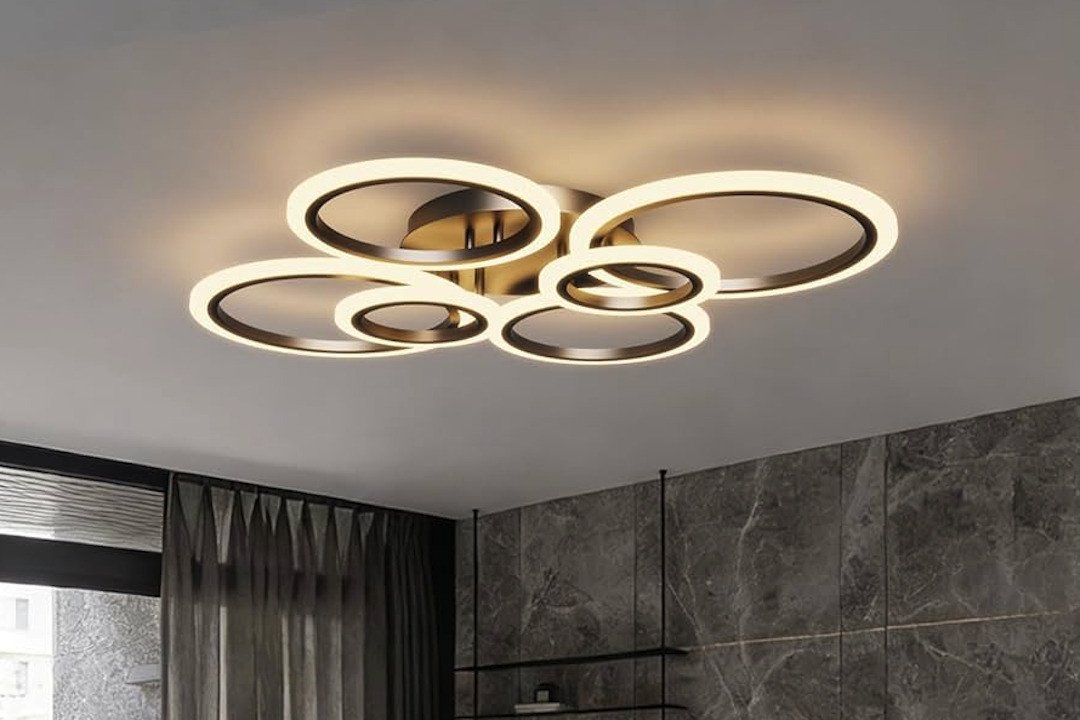
Upgrade Your Home with Alexa and Google Home Compatible Smart Ceiling Lamp
Thinking about giving your home a bit of a tech upgrade, specifically with your ceiling lights? You’ve probably heard about smart lighting and how it can make things more convenient, maybe even a little cooler. When it comes to smart ceiling lamps that play nice with your existing voice assistants like Alexa and Google Home, the big question is often: what exactly can they do for me, and how do I even pick one?
Simply put, Alexa and Google Home compatible smart ceiling lamps let you control your lighting Muzzhome using just your voice or a smartphone app. This goes way beyond just turning lights on and off. You can dim them, change their color temperature (from warm, cozy yellows to cool, focused blues), and even set them to change color entirely. They also integrate into routines, so your lights can come on automatically when you wake up or dim down when you say “movie time.” It’s about making your living space more adaptable to your needs and moods, without having to get up and fiddle with switches.
So, if you’re ready to ditch the old-school light switch and step into a more connected and customizable lighting experience, let’s dive into how these smart lamps work and what to look for.
Let’s be honest, the idea of “smart” might sound a bit like overkill for something as basic as a light. But once you experience it, the convenience really shines through. It’s not just about novelty; it’s about adding layers of functionality to a fundamental part of your home.
Hands-Free Convenience
This is the big one, right? You’re carrying in groceries, your hands are full, and you need to turn on the kitchen light. Instead of juggling bags, you can just say, “Alexa, turn on the kitchen light,” or “Hey Google, turn on the living room light.” It’s surprisingly useful in everyday situations, from waking up in the morning to settling down for the night.
Waking Up Gently
Instead of a jarring alarm, imagine your bedroom light slowly brightening like a sunrise. This gradual illumination can help regulate your sleep cycle and make waking up feel a lot less abrupt. You can often set this up as part of a “wake-up routine” in the smart home app.
Settling Down for the Evening
Similarly, when you’re ready to wind down, you won’t have to stumble around in the dark. A simple voice command can dim your lights to a warm, relaxing glow, creating the perfect ambiance for reading or watching TV.
Enhanced Ambiance and Mood
Smart ceiling lamps aren’t just about illumination; they’re about shaping the atmosphere of a room. The ability to adjust brightness and color temperature offers a level of control that traditional lighting just can’t match.
Tuning the Brightness
Need to read a book? Crank up the brightness. Want a cozy movie night? Dim it down to a soft glow. You can fine-tune the light output to suit the specific activity or mood you’re aiming for. This is much more nuanced than just on or off.
Color Temperature Control: Warm vs. Cool
This feature is a game-changer. Most smart ceiling lamps allow you to adjust the “color temperature” of the light, measured in Kelvin (K). Lower Kelvin numbers (around 2700K-3000K) produce a warm, yellowish light, similar to incandescent bulbs, which is great for relaxation and creating a cozy feel. Higher Kelvin numbers (4000K-6500K) produce a cooler, bluer light, which is better for tasks requiring focus, like reading or working, as it can mimic natural daylight. Being able to switch between these easily is a major advantage.
Energy Efficiency and Cost Savings
While the initial cost might be a bit higher than a standard fixture, smart LED ceiling lamps are designed with energy efficiency in mind.
LED Technology
The vast majority of smart lighting uses LED bulbs, which are significantly more energy-efficient than traditional incandescent or halogen bulbs. They consume less power for the same amount of light output, leading to lower electricity bills over time.
Smart Scheduling and Automation
You can program your lights to turn off automatically when not in use or when you leave the house. This prevents lights from being left on accidentally, further reducing energy consumption. Think of it as an automatic habit nudger.
Choosing the Right Smart Ceiling Lamp: What to Look For
Navigating the world of smart home gadgets can feel a bit overwhelming. When it comes to smart ceiling lamps, there are a few key things to consider to make sure you get a product that fits your needs and works seamlessly with your existing setup.
Compatibility is Key: Alexa & Google Home
This is non-negotiable. You’ve decided you want a smart lamp, and you already have Alexa or Google Home. So, the first thing to check is explicit compatibility.
Direct Voice Control
Look for products that specifically state they are “Works with Amazon Alexa” or “Works with Google Assistant.” This means you can use voice commands like “Alexa, dim the bedroom light to 50%” or “Hey Google, change the living room light to blue.”
App Integration
Beyond voice, you’ll want to ensure the lamp’s dedicated app integrates well with the Alexa or Google Home apps. This allows for more advanced control, scheduling, and the ability to include the light in broader smart home routines. For example, you could set up a “Goodnight” routine that turns off all lights, locks the doors, and adjusts the thermostat.
Lighting Features: Beyond Just On/Off
Modern smart ceiling lamps offer a lot more than just basic illumination. Think about how you want to use your lights in different situations.
Dimmability
This is a standard feature for most smart lamps, but it’s essential. Being able to adjust the brightness allows you to set the mood for various activities, from bright task lighting to soft, ambient light. Check the dimming range – some offer a wider, smoother dimming experience than others.
Color Temperature Adjustment (Tunable White)
As mentioned earlier, this is incredibly useful. Being able to switch between warm white (cozy) and cool white (task-oriented) with a voice command or app setting can drastically change the feel of a room. Look for lamps that offer a good range of Kelvin temperatures, typically from 2700K up to 6500K.
Full RGB Color Options
Some higher-end smart ceiling lamps go a step further and offer a full spectrum of RGB (Red, Green, Blue) colors. This transforms your ceiling light into a mood-setting device, allowing you to create vibrant, colored lighting for parties, holidays, or simply for fun. Consider if you really need this, as it can add to the cost.
Installation and Physical Design
The actual fixture itself is still important, even if it’s a smart one.
Fixture Type & Aesthetics
Smart ceiling lamps come in all sorts of styles and designs – flush mounts, pendant lights, track lights, and more. Consider the existing style of your room and choose a fixture that complements it. Think about the size of the room too; a small fixture might not provide enough light for a large space.
Ease of Installation
Most smart ceiling lamps are designed for relatively straightforward DIY installation, often replacing existing fixtures. However, if you’re not comfortable with basic electrical work, you might need to factor in the cost of hiring an electrician. Check if the lamp requires a specific type of wiring or if it’s compatible with standard connections. Some might require a separate smart hub, while others connect directly to your Wi-Fi.
Connectivity: Wi-Fi vs. Zigbee/Z-Wave
How the lamp communicates with your home network is crucial for reliability.
Direct Wi-Fi Connection
Many smart lamps connect directly to your home’s Wi-Fi network. This is convenient as it usually doesn’t require an additional hub. However, if you have a lot of Wi-Fi devices, too many direct Wi-Fi smart lamps could potentially strain your router’s capacity or lead to slower connections if your Wi-Fi isn’t robust.
Hub-Based Systems (Zigbee/Z-Wave)
Some smart lamps use communication protocols like Zigbee or Z-Wave. These require a compatible smart hub (like Philips Hue Bridge or SmartThings Hub) to connect to your Wi-Fi network. While this adds an extra piece of hardware, it often leads to a more stable and responsive smart home system, as these protocols are designed specifically for low-power, reliable device communication and can create their own mesh network, extending range.
Setting Up Your Smart Ceiling Lamp: A Practical Guide
Once you’ve chosen your smart ceiling lamp, the next step is getting it up and running. While the specifics can vary slightly between brands, the general process is quite similar. It’s usually not as complicated as it might seem.
Step 1: Physical Installation
This is the part that involves a bit of basic DIY.
Safety First
Always turn off the power to the light fixture at the circuit breaker before you begin any electrical work. Double-check that the power is off using a voltage tester if you have one.
Mounting the Fixture
Most smart ceiling lamps come with mounting hardware. You’ll typically need to attach a mounting bracket to your ceiling electrical box, then connect the wires from the lamp to the corresponding wires in your ceiling (usually black to black, white to white, and green or bare copper for ground). Follow the manufacturer’s instructions carefully for your specific model.
Securing the Lamp
Once the wiring is done, the lamp fixture will attach to the mounting bracket. Reinstall any decorative covers or diffusers.
Step 2: Connecting to Your Network and Voice Assistant
This is where the “smart” part comes in.
Downloading the Manufacturer’s App
You’ll need to download the specific app for your smart lamp brand onto your smartphone or tablet. This app is essential for the initial setup and for accessing advanced features.
Creating an Account and Adding the Device
Open the app, create an account if you don’t have one, and then follow the prompts to add a new device. The app will guide you through connecting the lamp to your home Wi-Fi network. You’ll usually need to select your Wi-Fi network and enter your password. Some lamps might use Bluetooth for the initial connection before switching to Wi-Fi.
Linking to Alexa or Google Home
Once the lamp is connected to your Wi-Fi and configured in its own app, you’ll need to link it to your Alexa or Google Home account.
- For Alexa: Open the Alexa app, go to “Skills & Games,” search for the smart lamp’s brand skill, enable it, and sign in with your smart lamp account credentials. Then, tell Alexa to “discover devices.”
- For Google Home: Open the Google Home app, tap the “+” icon (Add), select “Set up device,” then “Works with Google,” and find your smart lamp’s brand from the list. Follow the prompts to link your accounts.
Step 3: Configuring and Using Your Smart Lights
Now for the fun part: controlling your lights!
Renaming Your Lights for Clarity
Once discovered, you can rename your lights to something intuitive, like “Living Room Ceiling,” “Kitchen Overhead,” or “Bedroom Lamp.” This makes voice commands much easier and more natural.
Exploring App Features
Spend some time exploring the manufacturer’s app. You’ll find options for dimming, color temperature adjustments, and, if applicable, RGB color selection. You can often create custom scenes (e.g., “Reading Light,” “Movie Night”) with specific brightness and color settings.
Setting Up Schedules and Routines
This is where the true smart home integration happens.
- Schedules: Program your lights to turn on or off at specific times on specific days. This is great for security (making it look like someone is home) or for automating your morning and evening routines.
- Routines: Within the Alexa or Google Home apps, you can create routines that trigger multiple actions with a single voice command. For example, a “Good Morning” routine could turn on your bedroom light to 20% brightness, start your smart coffee maker, and announce the weather. A “Leaving Home” routine could turn off all lights and lock your smart locks.
Advanced Features and Integrations: Going Beyond the Basics
Once you’ve got your smart ceiling lamps set up and are comfortable with the basic voice and app controls, there’s a whole world of advanced features and integrations to explore. These can make your smart home feel even more dynamic and responsive.
Motion and Occupancy Sensing
Some smart ceiling lamps, or smart lighting systems that work with them, can incorporate motion or occupancy sensors. This takes automation to the next level.
Automatic On/Off with Presence
Imagine walking into a room, and the lights turn on automatically. When you leave, they turn off after a short delay. This is incredibly convenient, especially for areas like hallways, bathrooms, or walk-in closets where you might not want to fiddle with switches.
Energy Savings
Beyond convenience, these sensors are excellent for energy conservation. Lights only turn on when someone is present, ensuring no electricity is wasted on empty rooms.
Integration with Other Smart Devices
The real power of Alexa and Google Home is their ability to connect different smart devices into cohesive ecosystems.
Triggering Actions Based on Light Status
You can set up routines where the status of your ceiling light can trigger other devices. For example, you could have a routine that when the “Living Room Ceiling” light is turned to a specific color (like red), it signals a smart security camera to start recording. Or, if your lights are dimmed below a certain percentage, it could trigger a “wind down” playlist on a smart speaker.
Using Light as a Notification System
Some smart lamps can be programmed to flash or change color to alert you to certain events. For instance, a slow pulse of blue light could indicate an incoming notification for a delivery, or a rapid red flash could signal a smoke alarm activation (though this should always be backed by a dedicated alarm system).
Geofencing for Automation
Geofencing uses your smartphone’s location to trigger actions when you enter or leave a defined area, like your home.
“Welcome Home” and “Leaving Home” Scenes
When your phone’s GPS indicates you’ve arrived home, your smart ceiling lamps can automatically turn on to a preferred brightness and color. Conversely, when you leave, they can all turn off to save energy. This requires location services to be enabled for the Alexa or Google Home app on your phone.
Smart Home Hub Integration for Complex Setups
While many smart lamps connect directly to Wi-Fi, for more complex or robust smart home setups, integrating them with a dedicated smart home hub can be beneficial.
Dedicated Hub Benefits
Hubs like Philips Hue Bridge or Samsung SmartThings Hub can provide more reliable and faster communication, especially if you have a large number of smart devices. They create their own dedicated network (like Zigbee or Z-Wave), which can be less susceptible to interference from your Wi-Fi network.
Advanced Automation Possibilities
Hubs often unlock more complex automation possibilities, allowing for intricate logic chains and device interactions that might not be possible with Wi-Fi-only devices.
Troubleshooting Common Issues: Keeping Your Lights Smart
Even with the best technology, you might run into the occasional glitch. Most smart ceiling lamp issues are relatively straightforward to resolve with a few common troubleshooting steps. Don’t panic if your light acts up; usually, it’s a quick fix.
Lamp Not Responding to Voice Commands
This is a frustrating one, but often it’s simple.
Check Your Internet Connection
Your smart lamp relies on a stable internet connection to communicate with Alexa or Google Home. Ensure your Wi-Fi is working correctly on other devices. Sometimes, a router reboot can resolve connectivity issues.
Verify Device Discovery and Linking
Go into the Alexa or Google Home app and ensure the lamp is still listed as a discovered device. If not, you may need to re-discover it. Also, check that the skill or service link between your smart lamp account and your voice assistant account is still active.
Speak Clearly and Correctly
Make sure you’re using the exact name you assigned to the light. Try speaking clearly and a little slower. Sometimes, background noise can interfere with the voice assistant’s ability to understand your command.
Inconsistent Performance or Dropped Connections
If your lamp frequently goes offline or responds slowly, it’s usually a connectivity issue.
Wi-Fi Signal Strength
Your smart lamp needs a strong Wi-Fi signal. If it’s located far from your router, consider a Wi-Fi extender or mesh network to improve coverage.
Router Overload
If you have many devices connected to your Wi-Fi, your router might be struggling. Consider upgrading your router to a more powerful model or ensuring your firmware is up to date.
Interference
Other electronic devices can sometimes interfere with Wi-Fi signals. Try moving potential sources of interference, like microwaves or cordless phones, away from your router or smart lamp.
App Not Syncing or Features Unavailable
If the manufacturer’s app isn’t showing the correct status or certain features are greyed out, it’s often an app or account issue.
Restart the App and Device
Close and reopen the smart lamp’s app. If that doesn’t work, try unplugging the lamp’s power source for about 30 seconds and plugging it back in.
Check for App and Firmware Updates
Ensure you have the latest version of the manufacturer’s app installed on your phone. Also, check within the app for any available firmware updates for the lamp itself. These updates often contain bug fixes.
Re-link Accounts
In some cases, unlinking and then re-linking your smart lamp account to your Alexa or Google Home account can resolve syncing issues.
Color or Brightness Not Changing as Expected
This can be due to incorrect settings or a communication lag.
Double-Check Scene/Routine Settings
If the issue occurs within a specific scene or routine, review the settings for that scene to ensure the desired brightness and color are correctly configured.
Reset to Factory Defaults
As a last resort, you can often reset the smart ceiling lamp to its factory default settings. This will erase all custom configurations and require you to set it up again from scratch, but it can resolve persistent issues. Refer to your lamp’s manual for specific reset instructions.