
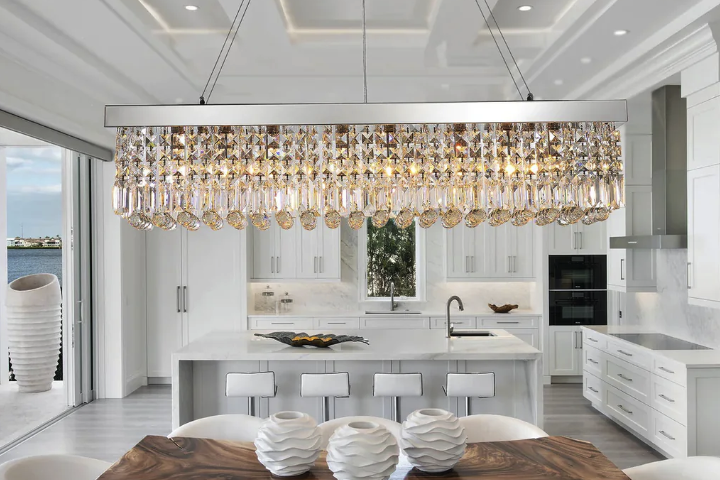
Elegant Crystal Layered Chandelier: A Luxurious Lighting Statement
The Elegant Crystal Layered Chandelier represents a significant contribution to interior design, functioning as both a primary light source and a piece of decorative art. This type of chandelier is characterized by its multiple tiers of cascading crystal elements, designed to refract and reflect light, creating a dynamic visual effect. The term “elegant” in its name refers to its refined aesthetic, often achieved through the quality of materials and the meticulous craftsmanship involved in its construction. As a “luxurious lighting statement,” it aims to elevate the ambiance of a space, making it a focal point that communicates sophistication and wealth.
The chandelier’s Muzzhome lineage can be traced back to rudimentary oil lamps suspended from ceilings. Early forms, often associated with medieval times, were simple wooden crosses holding candles. As technology and artistry advanced, so did the complexity and beauty of these fixtures. The Baroque period, in particular, saw the rise of elaborate chandeliers, frequently adorned with rock crystal and glass. These were not merely functional but also served as status symbols for royalty and the aristocracy.
Early Lighting Before the Chandelier
Before the widespread adoption of chandeliers, homes relied on simpler forms of artificial illumination. Open fires in hearths provided ambient light, supplemented by candles and oil lamps. These early methods were often hazardous and produced significant soot, impacting both air quality and the cleanliness of interior spaces. The practical limitations of these light sources spurred innovation towards more contained and efficient designs.
The Advent of the Crystal Chandelier
The development of glassmaking techniques, particularly advanced cutting and polishing methods, paved the way for the crystal chandelier. Bohemia, in particular, became a renowned center for the production of high-quality glass, leading to the widespread use of lead crystal. This material, with its refractive properties, allowed for the creation of dazzling displays of light. The intricate arrangements of prisms, pendeloques, and other crystal components became hallmarks of these opulent fixtures.
Modern Adaptations and Innovations
The 20th and 21st centuries have seen significant evolution in chandelier design. While traditional crystal chandeliers remain popular, contemporary interpretations incorporate a wider range of materials, including metal alloys, acrylic, and even LEDs. The emphasis has shifted in some designs towards minimalist aesthetics or abstract forms, while still retaining the layered structure and light-refracting qualities that define the “layered” aspect of this fixture. Smart technology has also been integrated, allowing for dimming, color temperature control, and remote operation.
Design Principles and Material Composition
The defining characteristic of the Elegant Crystal Layered Chandelier lies in its multi-tiered structure. This layering is not merely decorative; it plays a crucial role in how the fixture interacts with light. The arrangement of crystals on each level influences the pattern and intensity of illumination, creating a sense of depth and grandeur. The choice of materials is paramount, with genuine crystal offering a distinct brilliance compared to imitation alternatives.
The Significance of Layering in Light Distribution
The tiered design acts as a light prism, with each layer contributing to the overall diffusion and accentuation of light. The upper layers often project light downwards and outwards, while lower layers can serve to concentrate and reflect light back upwards. This creates a multi-dimensional lighting effect, avoiding harsh shadows and instead producing a soft, inviting glow. Consider it a carefully orchestrated dance of light, where each crystal plays its part in a grand performance.
Types of Crystal and Their Properties
Genuine crystal chandeliers typically utilize lead crystal, characterized by its high refractive index and “fire” – the spectral colors that appear when light passes through it. Different percentages of lead oxide result in varying degrees of clarity and brilliance.
Lead Crystal
Lead crystal, containing at least 24% lead oxide, is the benchmark for high-quality chandeliers. Its density and molecular structure allow for exceptional light refraction, producing a brilliant sparkle. The cutting of lead crystal is also a crucial factor, with precise faceting maximizing the light-capturing and reflecting capabilities.
Other Crystal Variants
While lead crystal is the most prized, other forms of crystal are also used. Strass crystal, for instance, is a type of leaded glass with a high lead oxide content, often used to mimic the appearance of genuine diamonds. However, it is important to distinguish these from genuine stones.
Metal Frameworks and Finishes
The framework supporting the crystal elements is typically constructed from metal. Common materials include brass, iron, and steel. The finish applied to these metals significantly impacts the overall aesthetic. Polished brass can offer a warm, reflective surface, while brushed nickel or antique bronze can provide a more muted, sophisticated look.
Polished Brass
Polished brass provides a classic and reflective surface that complements the sparkle of crystal. Its warmth can contribute to an inviting atmosphere.
Brushed Finishes (Nickel, Silver)
Brushed finishes offer a subtler, less reflective quality, often conveying a sense of understated luxury. These finishes are less prone to showing fingerprints.
Darker Patinas (Bronze, Black)
Darker patinas, such as antique bronze or black, can create a dramatic contrast with the clarity of the crystals, lending a more opulent or modern feel, depending on the design.
Ambiance and Aesthetic Impact
The Elegant Crystal Layered Chandelier is celebrated for its ability to transform a room’s atmosphere. It’s more than just illumination; it’s about creating an experience. The way it scatters light can imbue a space with a sense of romance, formality, or celebratory joy. Its presence commands attention, acting as a visual anchor in any interior design scheme.
Creating a Focal Point
A well-placed crystal chandelier immediately draws the eye. In a large dining room, it can define the dining area. In a grand foyer, it sets a tone of welcome and prestige. Its sheer visual weight and the brilliance of its light make it an undeniable centerpiece.
The Play of Light and Shadow
The intricate way crystals refract and reflect light creates a captivating interplay of light and shadow. This dynamic quality adds visual interest and depth to a room, preventing the lighting from feeling flat or monotonous. It’s like a thousand tiny spotlights, each contributing to a larger, mesmerizing effect.
Enhancing Interior Styles
While often associated with traditional and opulent decor, the layered crystal chandelier can also complement a range of other styles. In minimalist interiors, it can serve as a statement piece, adding a touch of glamour without overwhelming the space. In more maximalist designs, it can amplify the existing richness and complexity.
Traditional and Classic Decor
In traditional settings, the chandelier reinforces established aesthetics. Its ornate details and shimmering crystals align perfectly with antique furniture, intricate moldings, and rich textiles.
Contemporary and Modern Interiors
While seemingly a contrast, a crystal chandelier can bring a touch of unexpected luxury to modern spaces. Its clean lines (in some designs) and the inherent sparkle of crystal can add a sophisticated edge.
Transitional Designs
For rooms that blend styles, a crystal chandelier can act as a bridge, connecting elements of both traditional and contemporary design.
Placement and Installation Considerations
The effectiveness of an Elegant Crystal Layered Chandelier is heavily dependent on its placement and proper installation. Size, scale, and height relative to the room and furniture are critical factors. Incorrect placement can lead to it looking out of proportion or even becoming a functional obstruction.
Determining Appropriate Size and Scale
The chandelier should be scaled to the dimensions of the room. A common guideline for dining rooms is that the diameter of the chandelier should be approximately half to two-thirds the width of the dining table. In larger rooms, a more substantial fixture is required to maintain visual balance.
Dining Rooms
In dining rooms, the chandelier often hangs directly over the dining table, becoming the primary light source for activities at the table. Its scale is dictated by the table size and the room’s overall volume.
Foyers and Entryways
In foyers, the chandelier serves a dual purpose: to welcome guests and to illuminate the entry. It should be large enough to make an impression but not so low as to impede movement.
Living Rooms and Bedrooms
In living areas and bedrooms, chandeliers can add a touch of luxury. Placement over seating areas or beds requires careful consideration of height and potential for glare.
Ceiling Height and Drop Length
Ceiling height is a significant factor. In rooms with standard 8-foot ceilings, a very large or long-hanging chandelier might feel oppressive. Conversely, in rooms with high ceilings, a small fixture can appear lost. The fixture’s drop length needs to be carefully managed to maintain appropriate clearance.
Standard Ceilings
For standard 8-foot ceilings, the bottom of the chandelier should generally hang at least 7 feet from the floor to allow for comfortable headroom.
High Ceilings
Rooms with vaulted or higher ceilings offer more flexibility in terms of chandelier size and drop length. The fixture can be hung lower to create a more intimate area within the large space.
Professional Installation and Electrical Requirements
Chandelier installation, especially for heavier, multi-tiered fixtures, often requires professional expertise. This ensures structural integrity and electrical safety. The existing electrical box must be capable of supporting the weight of the chandelier, and proper wiring must be in place.
Weight Bearing Capacity
The ceiling box and support hardware must be rated to hold significant weight. Crystal chandeliers, with their numerous components, can be surprisingly heavy.
Electrical Wiring and Safety
Correct wiring is essential to prevent electrical hazards. This includes ensuring the fixture is properly grounded and connected to the appropriate circuit.
Maintenance and Care
The enduring brilliance of an Elegant Crystal Layered Chandelier is contingent upon regular cleaning and maintenance. Dust and grime can dull the sparkle of the crystals, diminishing the fixture’s visual appeal and light output.
Cleaning Crystal Components
Each crystal element typically needs to be cleaned individually. Gentle cleaning solutions, such as a mixture of water and a mild dish soap, are often recommended. Avoid abrasive cleaners or harsh chemicals that can damage the crystal or its finish.
Gentle Cleaning Solutions
A soft cloth dampened with a mild cleaning solution is usually sufficient for removing dust and fingerprints.
Avoiding Abrasive Materials
The use of rough cloths or abrasive cleaners can scratch the crystal. Soft microfiber cloths or lamb’s wool dusters are preferred.
Framework and Metal Finish Care
The metal framework also requires attention. Different metal finishes necessitate specific care. Polished metals might require occasional polishing with a dedicated metal cleaner, while darker finishes may only need dusting.
Polished Metal Treatment
Regular polishing with a non-abrasive metal polish can help maintain the shine of brass or other polished metals.
Darker Finish Preservation
Darker finishes, like bronze or antique brass, may require less frequent intervention. Over-polishing can, in fact, remove the desired patina.
Lamp Replacement and Bulb Considerations
When replacing bulbs, it is important to use the correct wattage and type recommended by the manufacturer. Some crystal chandeliers are designed for specific bulb types to achieve the desired light diffusion and heat output, protecting the crystals from excessive heat.
Bulb Type and Wattage
Always adhere to the manufacturer’s specifications for bulb type (e.g., incandescent, LED) and maximum wattage to prevent overheating or damage to the fixture.
LED Conversion Benefits
Modern LED bulbs offer energy efficiency and a longer lifespan, making them an attractive alternative for replacing older incandescent bulbs. They also generate less heat, which is beneficial for crystal fixtures.
Economic and Cultural Significance
The Elegant Crystal Layered Chandelier is not solely a functional object but also carries economic and cultural weight. Its production involves skilled artisans and contributes to specialized industries. Culturally, it has become a symbol of prosperity and refined taste, often featured in media and design publications to represent luxury.
The Artistry of Crystal Craftsmanship
The creation of high-quality crystal chandeliers involves a complex process of glassblowing, cutting, polishing, and assembly. This requires specialized tools, extensive training, and meticulous attention to detail. The artisans who produce these fixtures are inheritors of a long tradition of glassmaking.
Glassblowing and Shaping
The initial shaping of glass components is a delicate art, requiring precision to create the desired forms and thicknesses.
Faceting and Polishing
The cutting and polishing of crystal are crucial for maximizing its light-refracting qualities. Intricate faceting patterns, meticulously applied, are a hallmark of fine craftsmanship.
Market Value and Investment Potential
Due to the labor-intensive nature of their creation and the quality of materials used, Elegant Crystal Layered Chandeliers can represent a significant financial investment. In some cases, antique or exceptionally well-crafted pieces can appreciate in value over time, becoming collector’s items.
High-End Market Segments
These chandeliers typically occupy the higher end of the lighting market, catering to consumers seeking premium quality and distinctive design.
Antique and Vintage Value
Well-preserved antique crystal chandeliers, particularly those from renowned historical periods or designers, can command substantial prices in the secondary market.
Symbolism and Representation of Wealth
Throughout history, elaborate chandeliers, especially those made of crystal, have been employed as potent symbols of wealth, status, and power. Their brilliance and perceived costliness communicate a certain social standing to observers. This symbolism continues to resonate in contemporary interior design contexts.
Status and Prestige
The presence of a layered crystal chandelier in a home or establishment can convey an image of affluence and sophisticated taste.
Design as a Reflection of Lifestyle
For some, the choice of such a lighting fixture is a deliberate statement about their lifestyle and an appreciation for beauty and craftsmanship.