Reviving Retro: Bauhaus Living Room Chandelier
The Bauhaus movement was established in 1919 by architect Walter Gropius in Weimar, Germany, as an innovative educational institution that integrated fine arts with applied arts. The school emphasized functionality and simplicity in design, with its name “Bauhaus” meaning “building house” in German, reflecting its architectural foundations. The movement developed during the post-World War I period, when Germany was experiencing significant social and cultural transformation.
The institution relocated from Weimar to Dessau in 1925, where it expanded its influence and faculty. Notable instructors included painters Paul Klee and Wassily Kandinsky, and furniture designer Marcel Breuer. The Bauhaus curriculum combined theoretical study with practical workshop experience across multiple disciplines, including architecture, furniture design, textiles, typography, and industrial design.
The Bauhaus philosophy centered on creating well-designed objects that could be mass-produced and made accessible to the general population. This approach merged aesthetic considerations with functional requirements and manufacturing efficiency. The school operated until 1933, when it was closed by the Nazi regime.
Its principles significantly influenced modern design, architecture, and art education, establishing foundational concepts for the International Style in architecture and industrial design practices that remain relevant today.
The Influence of Bauhaus on Interior Design
The impact of Bauhaus on interior design is profound and far-reaching. Its principles of minimalism, functionality, and the integration of art into everyday life have shaped the way spaces are conceived and executed. One of the most significant contributions of Bauhaus to interior design is the emphasis on open floor plans and the use of space.
This approach encourages a fluidity between different areas within a home, allowing for a more cohesive living experience. The idea was to create environments that fostered interaction and community, moving away from the compartmentalized rooms typical of earlier architectural styles. Moreover, Bauhaus introduced a new aesthetic characterized by clean lines, geometric forms, and a limited color palette.
This design language has permeated various aspects of interior design, from furniture to lighting fixtures. The use of industrial materials such as steel, glass, and concrete became commonplace, reflecting the movement’s commitment to modernity and innovation. Designers began to prioritize function over ornamentation, leading to the creation of iconic pieces that are still celebrated today.
For instance, the cantilever chair designed by Marcel Breuer exemplifies this philosophy, combining comfort with an elegant form that remains relevant in contemporary interiors.
The Characteristics of Bauhaus Living Room Chandeliers
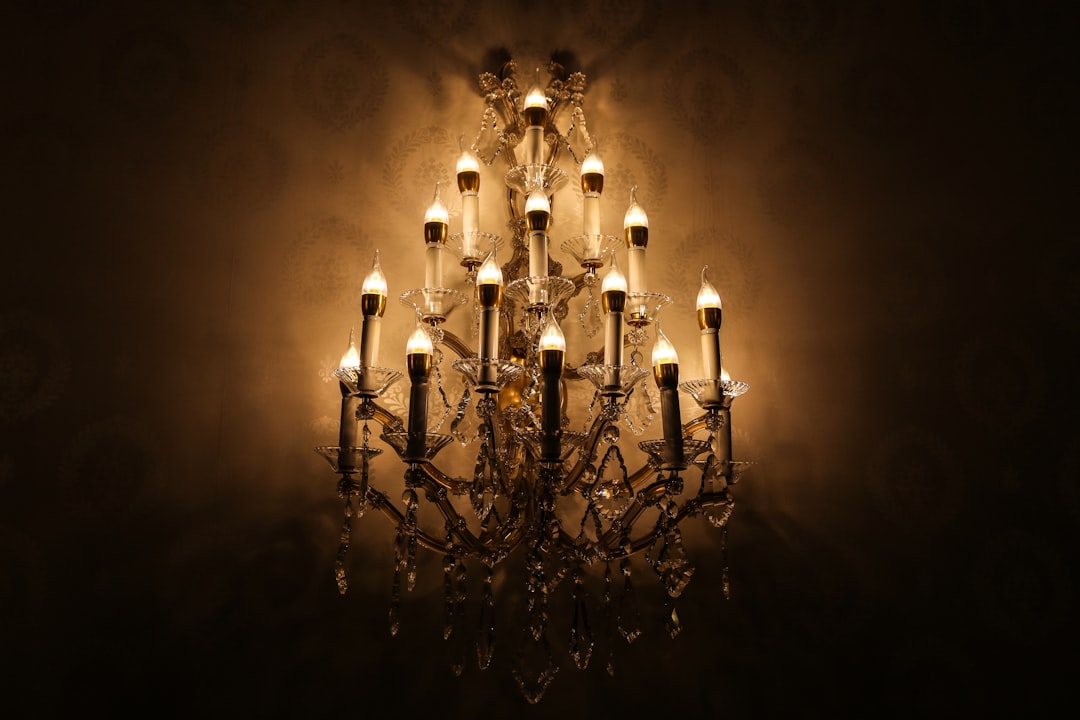
Bauhaus chandeliers are emblematic of the movement’s core principles, showcasing a blend of functionality and artistic expression. These lighting fixtures often feature geometric shapes and clean lines, embodying the minimalist aesthetic that defines Bauhaus design. Unlike traditional chandeliers adorned with intricate details and embellishments, Bauhaus chandeliers prioritize simplicity and clarity of form.
They often utilize materials such as metal and glass, which not only enhance their modern appeal but also allow for efficient light distribution. Another defining characteristic of Bauhaus chandeliers is their versatility in design. Many fixtures incorporate adjustable elements or modular components that can be tailored to fit various spaces and styles.
This adaptability reflects the Bauhaus philosophy of creating designs that serve multiple purposes while maintaining an elegant appearance. Additionally, color plays a crucial role in these chandeliers; while many are monochromatic or feature neutral tones, some designs incorporate bold colors or contrasting materials to create visual interest without overwhelming the overall aesthetic.
How to Incorporate Bauhaus Chandeliers into Modern Living Rooms
Incorporating Bauhaus chandeliers into modern living rooms can elevate the space while paying homage to a rich design heritage. One effective approach is to select a chandelier that complements existing furniture and decor without overpowering them. For instance, if your living room features mid-century modern furniture with clean lines and organic shapes, a Bauhaus chandelier with geometric forms can create a harmonious balance.
The key is to ensure that the chandelier serves as a focal point without clashing with other design elements. Another strategy is to consider the scale of the chandelier in relation to the room’s dimensions. In larger living spaces, a statement chandelier can draw attention and create an inviting atmosphere.
Conversely, in smaller rooms, opting for a more understated design can maintain an open feel while still providing adequate lighting. Additionally, layering light sources is essential; combining a Bauhaus chandelier with floor lamps or wall sconces can create depth and warmth in the space. This layered approach not only enhances functionality but also allows for flexibility in mood and ambiance.
Choosing the Right Bauhaus Chandelier for Your Space
Selecting the right Bauhaus chandelier involves careful consideration of several factors, including size, style, and functionality. First and foremost, assess the dimensions of your living room to determine an appropriate scale for your chandelier. A fixture that is too large can overwhelm a small space, while one that is too small may get lost in a larger room.
A general guideline is to add the length and width of your room in feet; this total will give you an approximate diameter for your chandelier in inches. Next, consider the style of your living room when choosing a chandelier. If your space leans towards minimalism with neutral colors and sleek lines, a simple yet striking Bauhaus chandelier can enhance this aesthetic without detracting from it.
On the other hand, if your living room features eclectic decor or bold colors, you might opt for a chandelier that incorporates contrasting materials or unique shapes to create visual interest. Finally, think about functionality; consider how much light you need based on the size of your room and its intended use. A chandelier with adjustable brightness or multiple light sources can provide versatility for different occasions.
Maintaining and Caring for Bauhaus Chandeliers
Maintaining Bauhaus chandeliers is essential to preserving their beauty and functionality over time. Regular cleaning is crucial; dust accumulation can dull the finish and reduce light output. For metal components, using a soft cloth dampened with mild soap and water can effectively remove grime without damaging the surface.
Glass elements should be cleaned with a glass cleaner or vinegar solution to maintain clarity and shine. It’s advisable to avoid abrasive materials that could scratch or mar the finish. In addition to cleaning, periodic inspections are necessary to ensure that all components are functioning correctly.
Check for loose connections or damaged wiring that could pose safety hazards. If your chandelier uses incandescent bulbs, consider upgrading to LED options for energy efficiency and longevity. When replacing bulbs, ensure they are compatible with your fixture’s specifications to avoid any electrical issues.
By taking these steps, you can ensure that your Bauhaus chandelier remains a stunning centerpiece in your living room for years to come.
The Versatility of Bauhaus Chandeliers
Bauhaus chandeliers are remarkably versatile fixtures that can adapt to various interior styles beyond their original context. Their minimalist design allows them to seamlessly integrate into both contemporary and traditional settings. For instance, in a modern industrial loft with exposed brick walls and metal accents, a Bauhaus chandelier can enhance the raw aesthetic while providing essential lighting.
Conversely, in a more classic setting with ornate furnishings, these chandeliers can serve as striking contrasts that highlight both styles’ unique characteristics. Moreover, Bauhaus chandeliers can be used in unexpected ways throughout the home. While they are often associated with living rooms or dining areas, they can also make bold statements in entryways or bedrooms.
In an entryway, a well-placed chandelier can create an inviting atmosphere for guests while setting the tone for the rest of the home. In bedrooms, smaller-scale Bauhaus chandeliers can add elegance without overwhelming the space, providing soft lighting that enhances relaxation.
Where to Find Authentic Bauhaus Chandeliers
Finding authentic Bauhaus chandeliers requires some research and an understanding of reputable sources. Many original pieces are available through specialized antique dealers or auction houses that focus on mid-century modern design. Websites like 1stdibs or Chairish offer curated selections of vintage furniture and lighting fixtures from trusted sellers worldwide.
These platforms often provide detailed descriptions and provenance information that can help buyers make informed decisions. Additionally, contemporary designers continue to draw inspiration from Bauhaus principles, resulting in new interpretations of classic designs available through modern retailers. Brands like Artemide or Flos produce lighting fixtures that embody the spirit of Bauhaus while incorporating modern technology and materials.
Visiting design showrooms or attending trade shows can also provide opportunities to discover authentic pieces or high-quality reproductions that honor the original designs while meeting contemporary standards for craftsmanship and sustainability. In conclusion, exploring the world of Bauhaus chandeliers reveals not only their historical significance but also their enduring appeal in modern interior design. By understanding their characteristics and how they can be integrated into various spaces, homeowners can appreciate these iconic fixtures as both functional lighting solutions and works of art that celebrate a rich legacy of design innovation.